OINP's New Rules: Why "Eligible" Doesn't Mean "Accepted" Anymore

You did everything right. You received a "Notification of Interest" from the Ontario Immigrant Nominee Program (OINP). You meticulously gathered every document for your OINP stream—reference letters, bank statements, status documents. Your application is complete, eligible, and "perfect."
A few months later, you receive a devastating update. Your file has been returned, and your fee refunded.
It wasn't refused for being ineligible. It was returned because, under the program’s updated discretion, the application was not prioritized based on Ontario’s current labour-market needs.
This is a new and critical reality for all OINP applicants. Recent regulatory updates give the OINP broader discretion in how applications are prioritized, reshaping what a ‘strong’ application means in practice.
Meeting eligibility requirements no longer guarantees that an application will proceed to nomination. Your application is not just competing with other candidates; it must also align with the province’s current economic and workforce priorities.
The "Eligibility" Trap: A Major Shift in OINP Processing
It used to be that a complete and eligible OINP application would be processed in due time. The main challenge was securing the initial invitation or Notification of Interest.
Not anymore.
The OINP may now return even eligible applications after submission if they do not align with current intake priorities. This move signals a fundamental shift from a passive ("do you qualify?") system to an active ("do we need you right now?") system.
This isn’t only about qualifications — broader economic and labour-market factors now influence processing decisions.
Competing with Ontario's Real-Time Priorities
Your application is assessed within the context of Ontario’s most current labour-market and economic considerations, including evolving PNP economic priorities.
Here are the key factors now at play:
1. Labour Market Imbalances
The OINP's primary goal is to fill specific, urgent gaps in the labour market. This is why we see targeted draws for healthcare, skilled trades, and tech.
However, this new power allows for a more granular approach. For example, even if "Software Developer" is a priority NOC, the province can return applications if they feel they have a surplus of them. They can prioritize a "Construction Manager" or "Registered Nurse" application over yours, even if your points are high, because the need is more urgent.
These shifts reflect Ontario’s PNP economic priorities and how they influence intake decisions.
2. Regionalization & Housing
Ontario has public, high-priority goals to build more homes and encourage settlement outside the Greater Toronto Area (GTA).
This means an applicant's intended destination is now a critical strategic component. Depending on program direction, applications tied to regions outside the GTA may be viewed more favourably if they support regional labour-market goals.
3. Broader Economic Factors
This new authority gives the OINP the ultimate flexibility to manage its intake. If a specific industry (even a "priority" one) enters a slowdown, they can pause or return applications from that sector to avoid nominating people who may struggle to find work upon landing.
How to Stay Aligned: A Strategic Approach to Your OINP Application
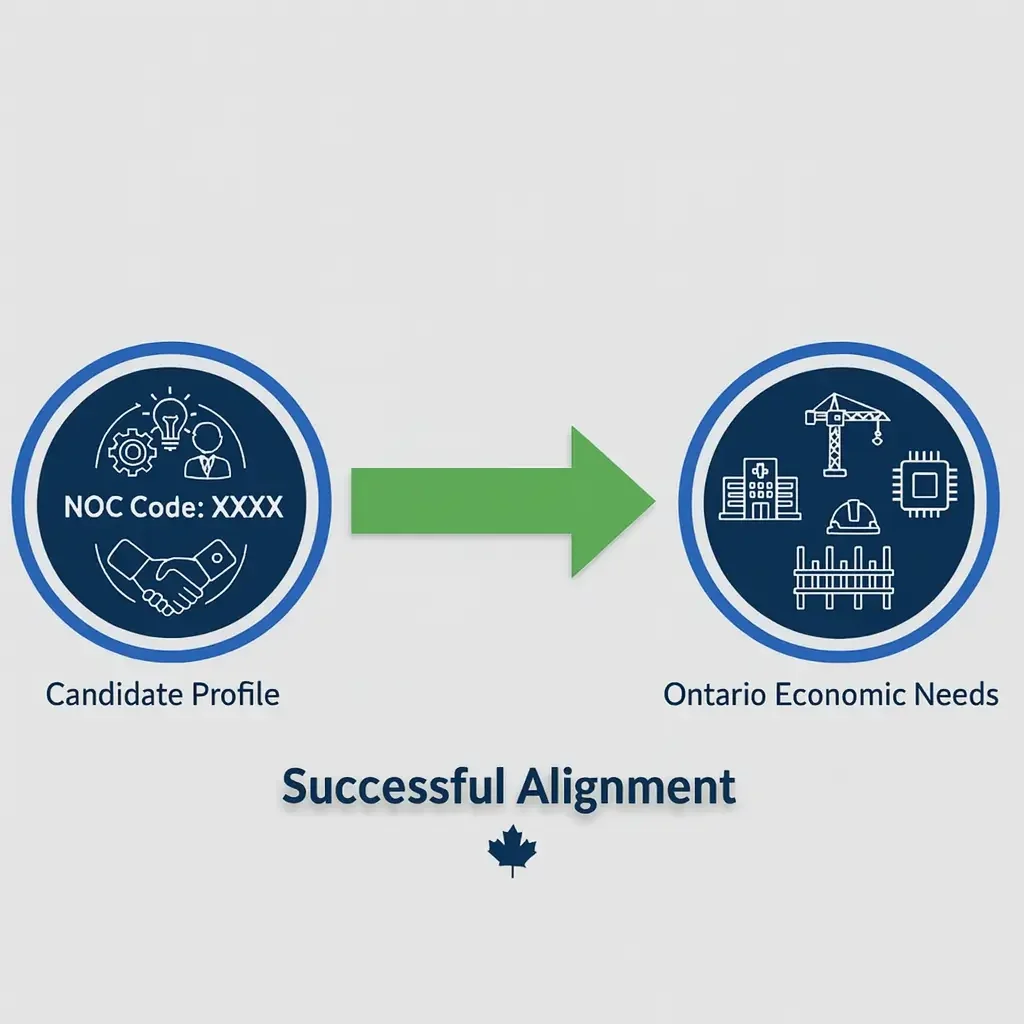
If eligibility is just the starting line, strategy is what wins the race. A "checklist" approach to your OINP application is now dangerously incomplete. Here is how you stay aligned.
1. Monitor OINP Draws Like a Stock Ticker
Don't just look at the general requirements for your OINP stream. You must actively monitor the specifics of every OINP draw.
Which NOCs are being invited?
What is the frequency? Did they just do a big tech draw, or have they been focusing on healthcare for three months?
What is the volume? Are they inviting 2,000 people or 200?
This data is the most accurate, real-time "map" of OINP's true priorities.
2. A "Good" Job Offer is Now a "Strategic" One
For OINP streams that require a job offer, the quality of that offer is paramount. It must send a clear signal to the OINP that you are an immediate economic asset.
Is it long-term and full-time?
Is it from an established employer in a priority sector (healthcare, trades, tech, manufacturing)?
Where is it located? A job offer outside the GTA can strengthen an application if it aligns with Ontario’s regional labour-market objectives that should be highlighted in your application.
3. Your NOC Code is Your Anchor
This is where we see the most costly errors. In this new system, an "almost-right" National Occupational Classification (NOC) code is a critical failure. Your chosen NOC must be an exact match for your job duties, and it must be one that OINP is actively targeting.
This is not the time for "close enough." An inaccurate or poorly matched NOC can lead to a returned application or, in serious cases, concerns about misrepresentation.
Your Application is Your Strategic Case
The new OINP rules are clear: the province wants the right people, for the right jobs, in the right locations.
Your application is no longer just a set of forms; it's your strategic case to the province of Ontario. Your application should clearly demonstrate how your skills and experience support Ontario’s current labour-market needs.
This new landscape requires a proactive, strategic approach.
Don't let your "perfect" application get returned.
If you are preparing your own OINP application and want a strategic review of your file, message me on LinkedIn to discuss how I can help ensure it's aligned with Ontario's current priorities.
To build a comprehensive immigration strategy from the ground up, book a consultation with our RCIC today. We help you navigate the system, not just become a number within it.